
Making Learning Interactive: Hands‑on Activities for Active Student Engagement
Why Interactive Activities?
At ActiveLearningLabs, we believe students learn best by doing, not by passively reading or watching. That’s why our interactive worksheets are designed to engage students in hands‑on learning, where they think, explore, and apply concepts in real‑world scenarios.
- ✅ Make decisions – Adjust sliders to set product prices and see how demand shifts.
- ✅ Analyze data – Interpret graphs to understand market trends and financial statements.
- ✅ Solve problems – Use spinners and dropdowns to make strategic choices.
- ✅ Get immediate feedback – Know instantly if answers are correct and learn from mistakes in real‑time.
Student finding if simple interest of 10% or compound interest of 8% is better for deposits, and how duration of deposit affects the decision.
How We Make Learning Interactive?
Dynamic Inputs
Students can manipulate values using the provided controls and see instant feedback.
- Sliders – Used in budgeting and pricing activities to let students adjust product prices and see how demand changes.
- Spinners – Allows students to make choices in decision-based activities, such as selecting the right insurance plan.
- Dropdowns & Drag‑and‑Drop – Helps classify financial terms, categorize transactions in accounting, etc.
- Inputs with Immediate Validation – Number and text inputs that support immediate validation of answers.
- Formula Builders – Write formulas to solve problems using pre-defined variables.
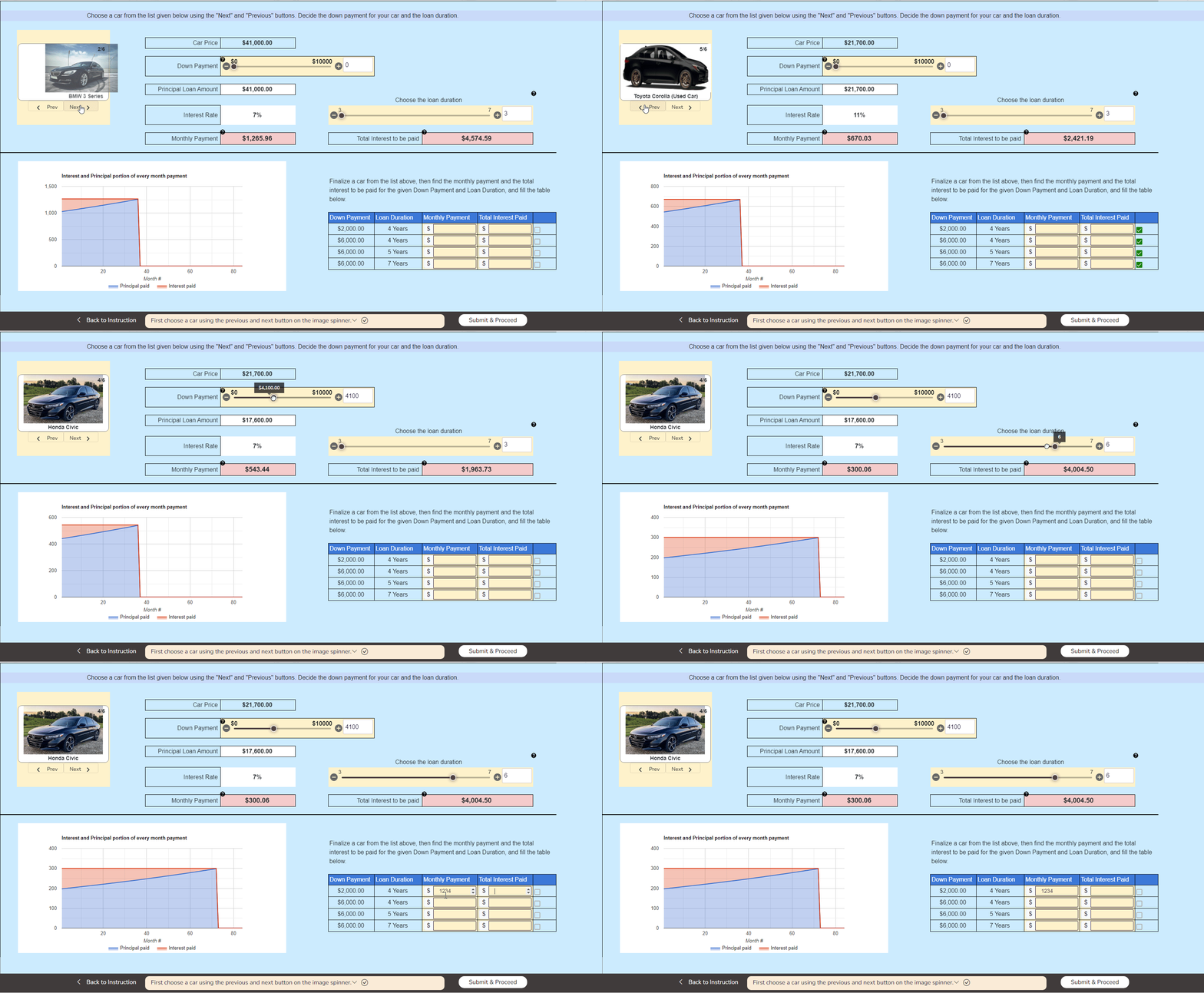
Student selecting the car of their choice using the spinner, adjusting down payment and loan duration using sliders.
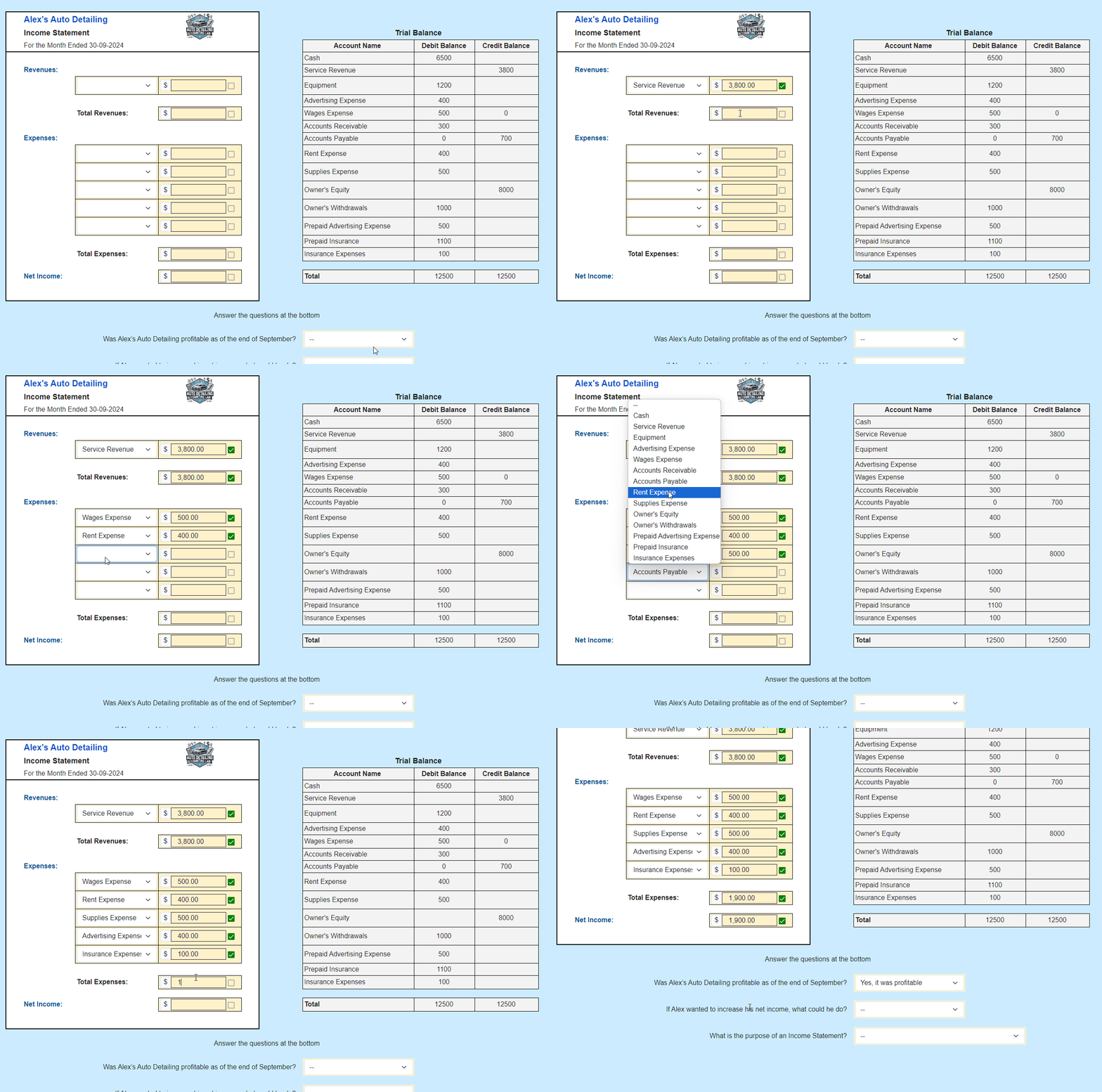
Student preparing journal entries using a unique set of transaction amounts.
⚡ Auto-Grading & Instant Validation
Auto-grading and instant validation turn learning into an interactive, game-like experience where students receive immediate feedback, encouraging them to think critically and adjust their approach in real time.
- Students get immediate feedback on their responses, reinforcing learning in real-time.
- Teachers save time with auto-grading and real-time progress tracking.
📊 Graph-Based Analysis & Data Interpretation
Graph-based analysis and data interpretation help students visualize complex concepts, turning numbers into meaningful insights. By interacting with dynamic charts, students can explore trends, compare scenarios, and make data-driven decisions, reinforcing critical thinking and real-world problem-solving skills.
- Interactive graphs help students visualize financial trends, analyze stock performance, and interpret economic data.
- Students manipulate variables and instantly see results on charts.
Student setting the price of a product by using sliders and given demand-profit curve.
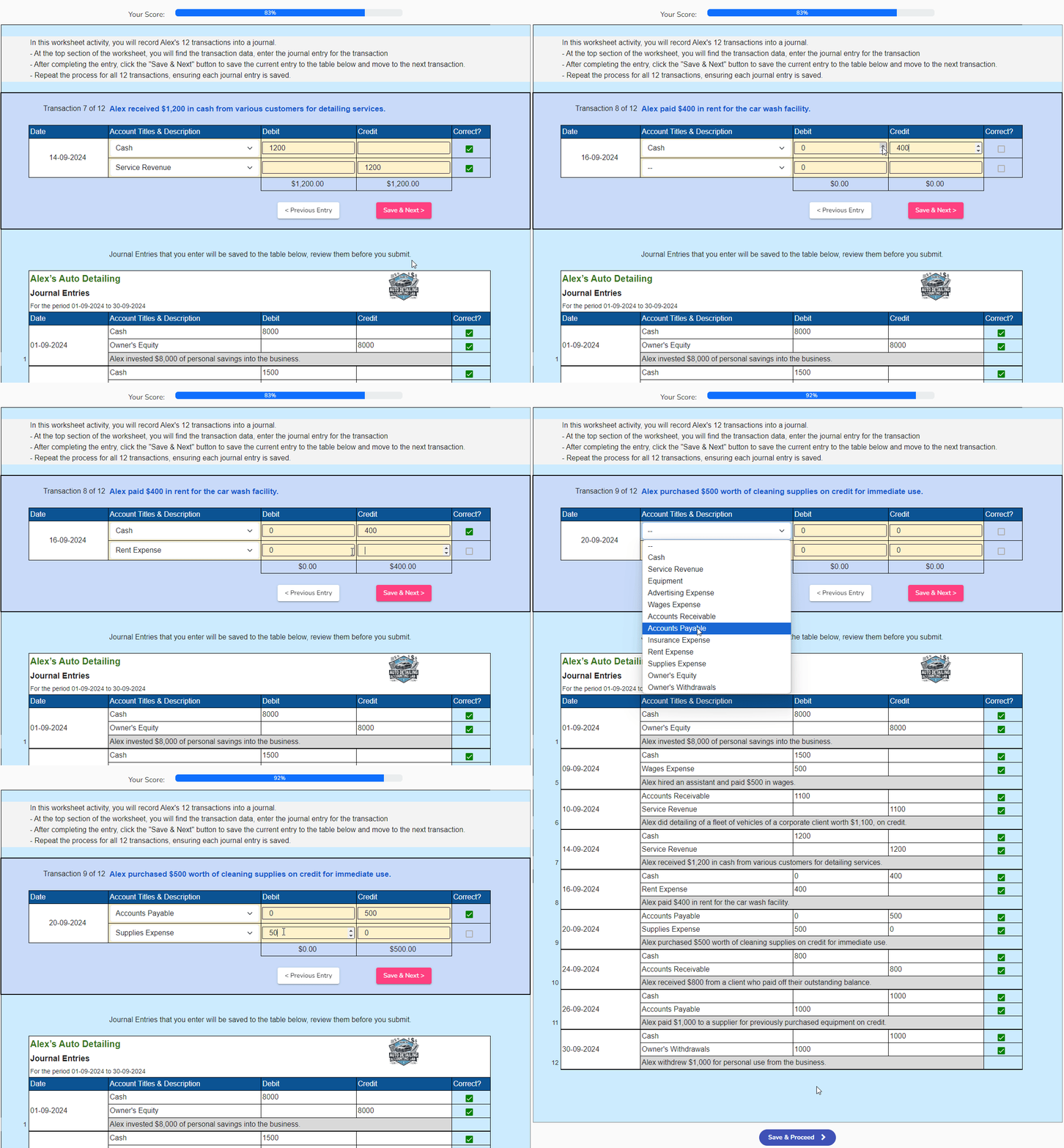
Student preparing journal entries using the unique set of transaction amounts received.
🎲 Randomization for Unique Student Work
One of the challenges teachers face is ensuring that students truly engage with the material rather than simply copying answers. Randomization solves this by giving each student a unique set of values, encouraging independent thinking, deeper understanding, and a more personalized learning experience.
- Every student gets different transaction amounts in accounting worksheets, reducing copying and encouraging independent thinking.
- Randomized numbers ensure students don’t just memorize answers but understand concepts.
🤖 Simulations & Scenario-Based Learning
One of the best ways to prepare students for real-world decision-making is through simulations and scenario-based learning. By placing students in realistic situations—like managing a budget, making ethical choices, or analyzing business strategies—they learn by doing, developing critical thinking and problem-solving skills in a risk-free environment.
- Students simulate business decisions in a risk-free environment (e.g., pricing a school store’s products).
- Students are placed situations to make money using investment choices, create their budgets, make choices on a car loan, etc.
- Students are placed in real-life scenarios to do accounting of businesses.
- Ethical dilemmas in workplace labs encourage critical thinking and moral reasoning.
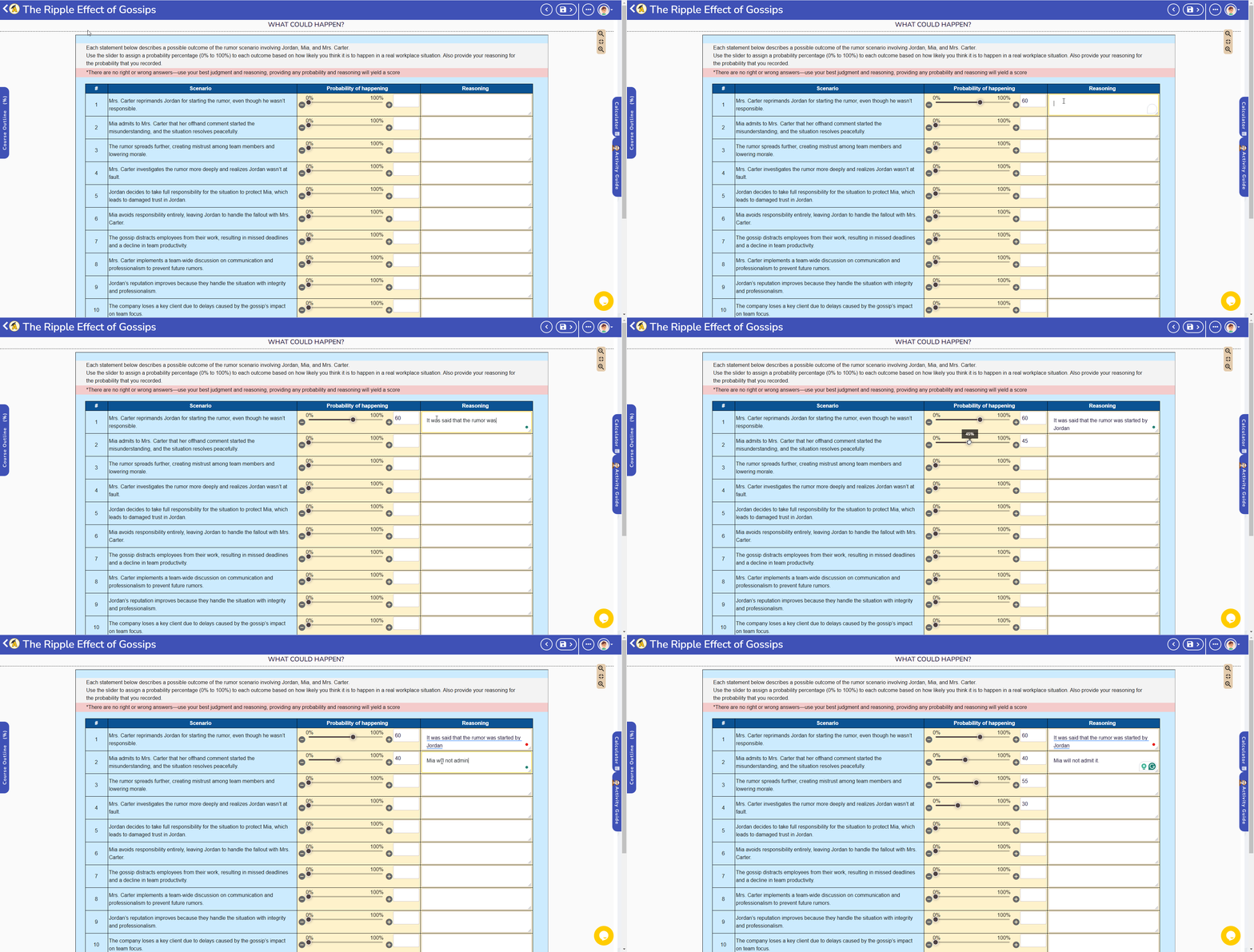
Student estimating the probability of some outcomes happening due to a gossip that was spread in the office.
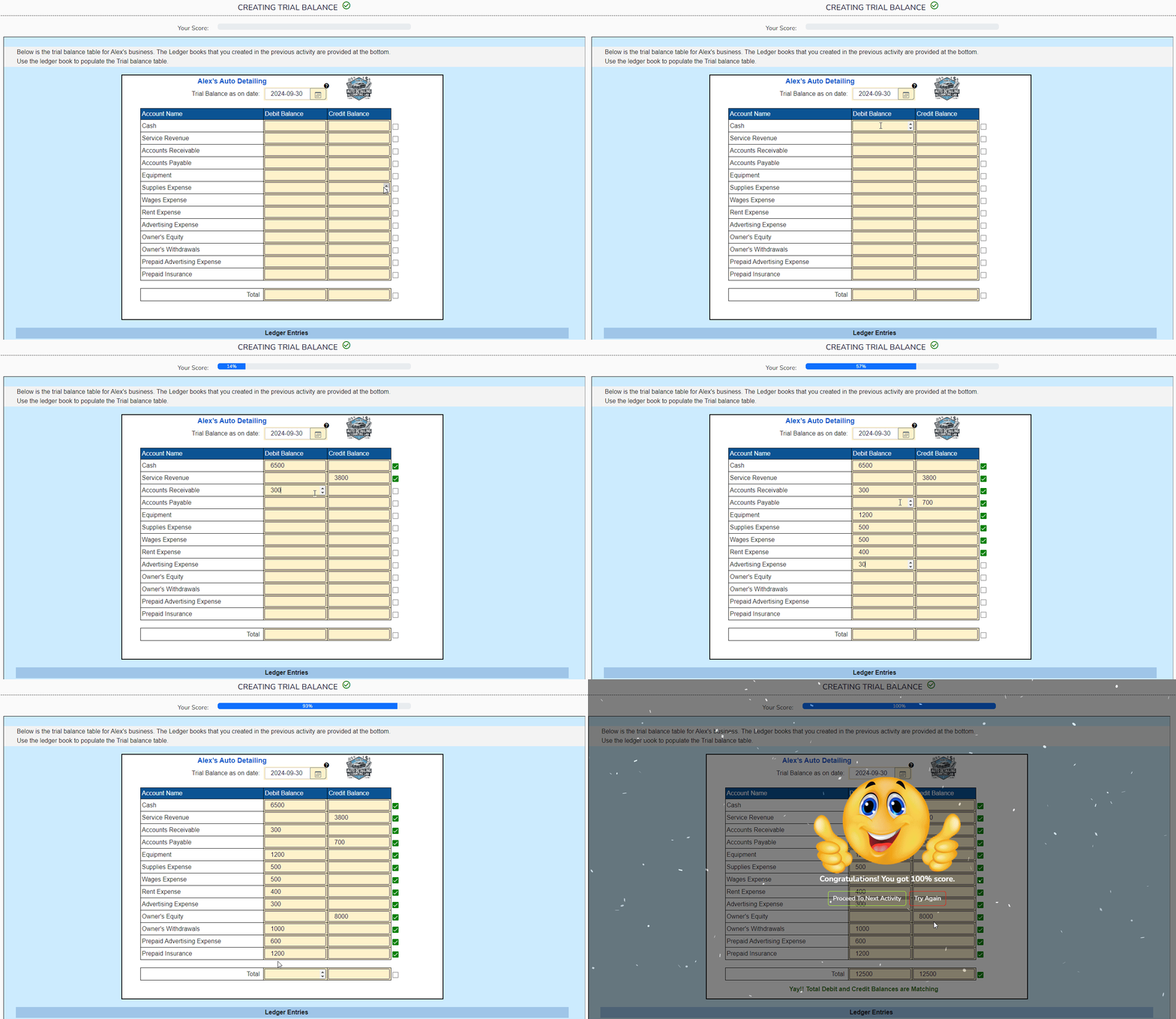
Student preparing Trial Balance from the ledger they already prepared, for a bigger Accounting unit.
🔄 Step-by-Step Guided Learning
Students receive immediate feedback on their responses, while teachers save time with auto‑grading and real‑time progress tracking.
- Reinforces learning through instant feedback.
- Frees teachers to focus on instruction and support.
Over 3000 Educators Love ActiveLearningLabs
What teachers are saying...
What students are saying...
I have to say my kids are really enjoying ActiveLearningLabs activities!! It is a fun way to incorporate the business side of things with a culinary twist! All of the activities are easy to adapt the level of difficulty for kids who need accommodations. My students were able to gain valuable communication, teamwork, and business skills throughout the challenge

I have used the Personal Finance Bundle for a year with my online learning students. It has helped them understand the material without needing to be in a live classroom with me. It checks their understanding and allows them to use real-life applications in a simulation setting.

I have been using ActiveLearningLabs this school year and have seen a remarkable increase in student engagement. From a teacher perspective, I appreciate the auto-grading feature and the correlation to curriculum. The ability to check individual as well as whole-class progress allows me to spend more time scaffolding and differentiating instruction.

It was great to see the students, especially ones that don't usually take charge, pick up a role, and lead their team(s). The kids really enjoyed the lab.

My students enjoyed learning about compound interest and the planning required to save and invest early, reaping the rewards in the years to come. I highly recommend ActiveLearningLabs to all FCS teachers looking for engaging content.

I will remember the interactive activities the most—especially the ones where I could experiment with different financial decisions to get a real feel for how the stock market works.

I would strongly recommend this lab to others. I will remember to align my career values with my personal values, not anyone else's. I also learned that understanding unemployment causes should be a key part of career planning, and that resumes are essential to impress employers.
The amortization table activity was really useful. I also learned the key differences between leasing and buying a car and what factors to consider before making a decision.
This lab made me rethink the importance of insurance. The interactive exercises explained how different types of insurance can protect both my personal and financial well-being in case of unexpected events.
The Investment unit helped me to understand that, you have to do your research before investing because it can be risky. Mutual funds are a good way to invest in a diversified portfolio. Stocks can have a nice return when investing but you can also lose your money if they go down. Choose wisely.
This lab was extremely helpful in understanding life after high school. The most valuable section for me was learning how to build a strong resume.
The section on interest rates and amortization was the most valuable to me. At first, I didn’t fully understand it, but after going through the lab, it became clear.
The savings lab was extremely helpful. It is important to start saving money as soon as you can afford to. The longer you save the more interest you will earn. The interest rate is an important thing to consider and help me decide what investment to make and where to save my money.
I now really understand how you have to actually do math in the real world and use it towards saving and investing in things
I would strongly recommend the Taxes lab. I will remember the interactive papers (W-2? and tax brackets) most. This is partially because I struggled with them, but they were also a good way to show realistic numbers.